Homeschool Thanksgiving Science
Thanksgiving is a season full of warmth—family gathered together, favorite recipes passed down through generations, and a table filled with the familiar tastes of fall. But this year, why not bring a little science to the celebration? This Thanksgiving, let your kitchen double as a homeschool science lab. With these four hands-on activities that blend holiday prep with real-world STEM lessons, your homeschoolers can contribute to the feast and learn something delicious along the way.
The Science Behind “Impossible” Pumpkin Pie
We’re starting with dessert, of course. The popular “impossible” pumpkin pie is a crustless wonder that forms its own layers as it bakes. Kids can help mix the ingredients, then watch the “magic” happen in the oven.
Here’s the science: The baking mix—including flour and leavening—naturally sinks to the bottom as the pie cooks. Meanwhile, the pumpkin purée, milk, and eggs rise and set into a smooth custard on top. The result is a two-layer structure created by density and heat, leading to a firm, sliceable bottom layer and creamy filling above. It’s a tasty way to demonstrate how different substances behave when heated, and why density matters in the kitchen.
Emulsions and Phase Inversion: Make Your Own Butter
For a hands-on activity that keeps little helpers busy, try shaking up your own butter. All you need is heavy cream, a jar with a tight lid, and some eager arms. Follow the simple instructions from Buggy and Buddy or watch this kid-friendly demonstration video.
As you shake the jar, the cream changes from an oil-in-water emulsion to a water-in-oil emulsion—a process called phase inversion. Churning breaks the membranes around the fat globules, letting them clump together until the liquid separates into buttermilk and a solid mass of butter. It’s chemistry you can spread on a warm dinner roll.
Cranberry Sauce and the Power of Pectin
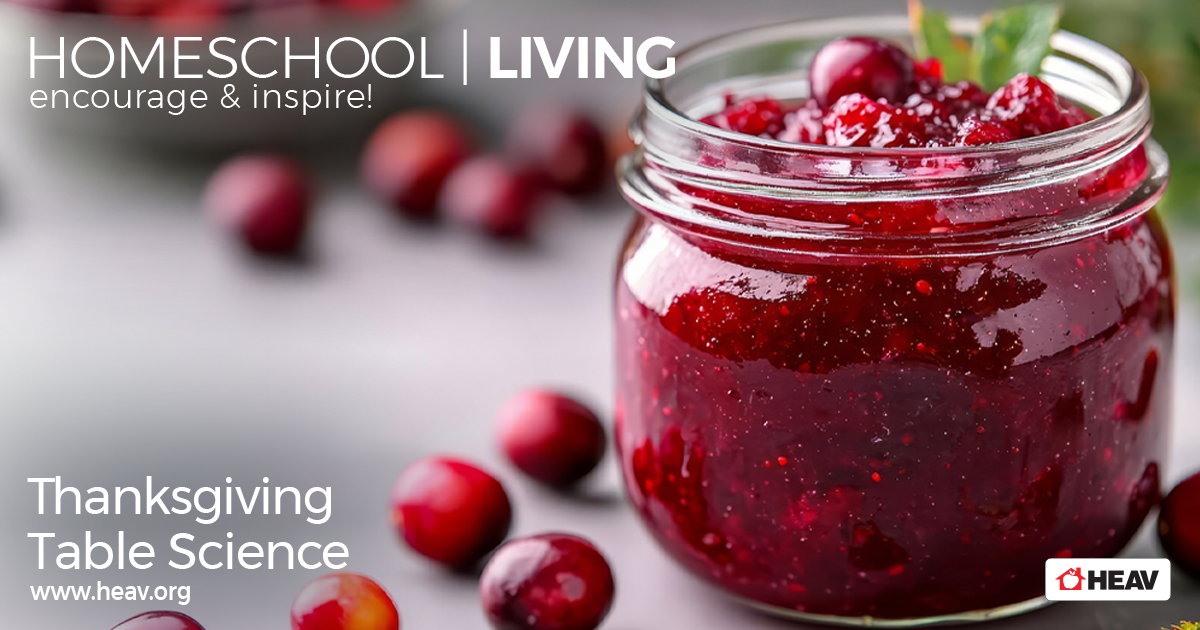
Cranberries are loaded with pectin, a natural fiber that helps liquids thicken into gels. But what does that actually look like? Before making your family’s favorite sauce, explore the chemistry behind it with this simple experiment from Scientific American.
Kids can watch how cranberries burst when heated, releasing pectin, which causes the sauce to thicken as it cools. Try testing store-bought versus homemade sauce, or experiment with adding sugar and acid to see how the gel forms differently. It’s a colorful, seasonal way to talk about polymers and kitchen chemistry.
For more cranberry-inspired homeschool Thanksgiving activities, check out these easy homeschool science ideas from STEAM Powered Family.
Bread-in-a-Bag: Yeast at Work
If you want an easy, low-mess recipe that lets children make something truly useful for the table, bread-in-a-bag is a winner. The method from KidMinds lets students knead, mix, and proof the dough right inside a zip-top bag.
As the dough rises, you can discuss how yeast consumes sugars and releases carbon dioxide, creating bubbles that make bread light and fluffy. Younger children will love squishing the dough, while older students can track rise times, compare textures, or even experiment with whole-wheat versus white flour.
For even more homeschool Thanksgiving activities, check out this Homeschool Living.

Megan Mora Fuentes
Enjoy this article?
For more insightful and encouraging homeschool related articles, homeschool living tips, and homeschool connections, visit our HEAV blog.