Cherry Blossom Nature Study for Spring Homeschool
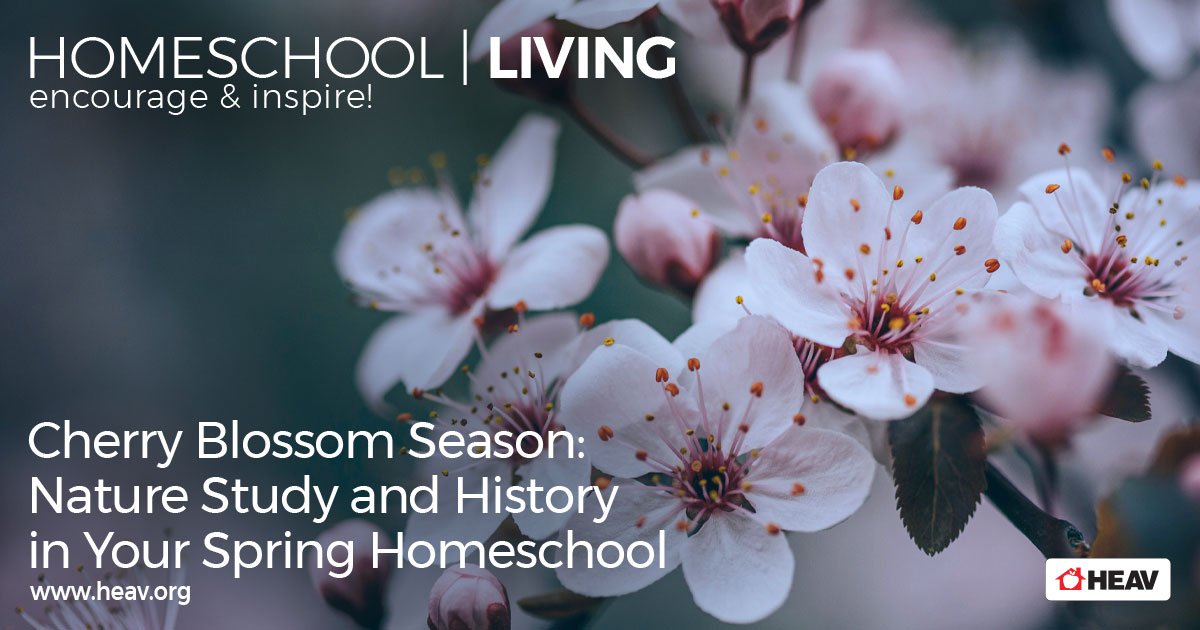
Cherry blossom season arrives quietly, blooms brilliantly, and then—almost as quickly—disappears. That fleeting beauty makes it the perfect anchor for both a cherry blossom nature study and history in your homeschool.
For Virginia families especially, the blossoms blooming just up the road in Washington, D.C., offer a natural opportunity to blend science, geography, art, and early 20th-century history into one meaningful spring homeschool unit study. Check out this Homeschool Living to explore the fascinating timeline of the Tidal Basin cherry trees, examine the parts of a cherry tree and their functions, and try out some fun art and science projects.
A Living History Lesson
In 1912, Japan gifted more than 3,000 cherry trees to the United States as a symbol of friendship between the two nations. This timeline outlines a fascinating story about the woman who spent over a quarter of a century campaigning for the planting of the cherry trees, the first lady who championed the effort, the Tokyo mayor who offered the gift, and how the gifted trees were later used to help restore their parent grove in Japan following the Second World War.
Planted along the Tidal Basin in Washington, D.C., those trees continue to bloom each spring, drawing visitors from across the country.
This historical moment opens the door to rich discussions:
- What was happening in the world in the early 1900s?
- Why do nations exchange cultural gifts?
- How can something as simple as a tree become a symbol of diplomacy?
Older students can research the role of diplomacy in international relations, while younger children might enjoy mapping the journey from Japan to Seattle, Washington, to Washington, D.C., and learning about the people involved in bringing the trees overseas.
Because this story connects directly to a nearby national landmark, it helps children see history not as something distant, but as something living and rooted in real places.
Spring Homeschool Cherry Blossom Nature Study: Science in Bloom
Cherry blossoms also offer beautiful opportunities for hands-on spring homeschool nature study.
Younger students can label the parts of a flower or press blossoms into a nature journal. Older students might track peak bloom predictions and compare them to actual bloom dates, exploring how weather patterns influence plant development. An infographic showing the six stages of cherry tree buds to blossoms can be seen here.
Even if you don’t have cherry trees nearby, observing any flowering tree can become part of your homeschool rhythm this season.
Poetry, Art, and Cultural Traditions
In Japan, cherry blossoms—known as sakura—represent the beauty and brevity of life. Families gather for hanami, a tradition of enjoying the blossoms together under blooming trees.
This tradition lends itself naturally to language arts and art:
- Write spring haiku inspired by nature.
- Paint watercolor blossoms using soft washes of pink and brown.
- Discuss the idea of appreciating beauty because it does not last forever.
Blending cultural tradition with seasonal observation helps children understand that nature connects people across time and geography.
Try This in Your Spring Homeschool
These four hands-on cherry blossom projects from I’m The Chef Too blend art and STEM seamlessly. Choose one or more to experiment with, depending on the ages of your children.
Learning doesn’t always require elaborate plans. Sometimes it begins with stepping outside, noticing what’s blooming, and asking a few thoughtful questions.
Cherry blossom season reminds us that education, like spring, unfolds in seasons. When we slow down enough to notice both history and nature around us, we give our children something richer than facts—we give them perspective.

Megan Mora Fuentes
Enjoy this article?
For more insightful homeschool related articles, living tips, and encouraging connections, visit our HEAV blog.