
Nativity Art: The Journey to the Manger
The final days before Christmas can so easily slip into hurry—lists, errands, last-minute preparations, and the constant feeling that we are running just a bit behind. But the week leading up to Christmas Eve is also one of the most tender times of the year, a perfect invitation to slow down with our families, breathe deeply, and walk thoughtfully toward the manger.
Nativity Art 7-Day Devotional
This simple seven-day Nativity art and scripture journey creates space for reflection and wonder during the busiest season. Each day includes a short Scripture reading, a song selection to listen to, and a small, natural craft element added to a single background—an unfolding picture that grows as Christmas draws near.
There’s no rush, no pressure to make it perfect; the beauty is in the quiet, shared rhythm of doing one small thing each day. Each day’s activity takes fifteen minutes or less, and uses natural and found elements with a lot of room for creativity.
If you begin this Nativity art project tomorrow, you’ll end up placing the Christ child in the manger on Christmas Eve. Let this final week before Christmas be a gentle, meaningful experience for your homeschool.
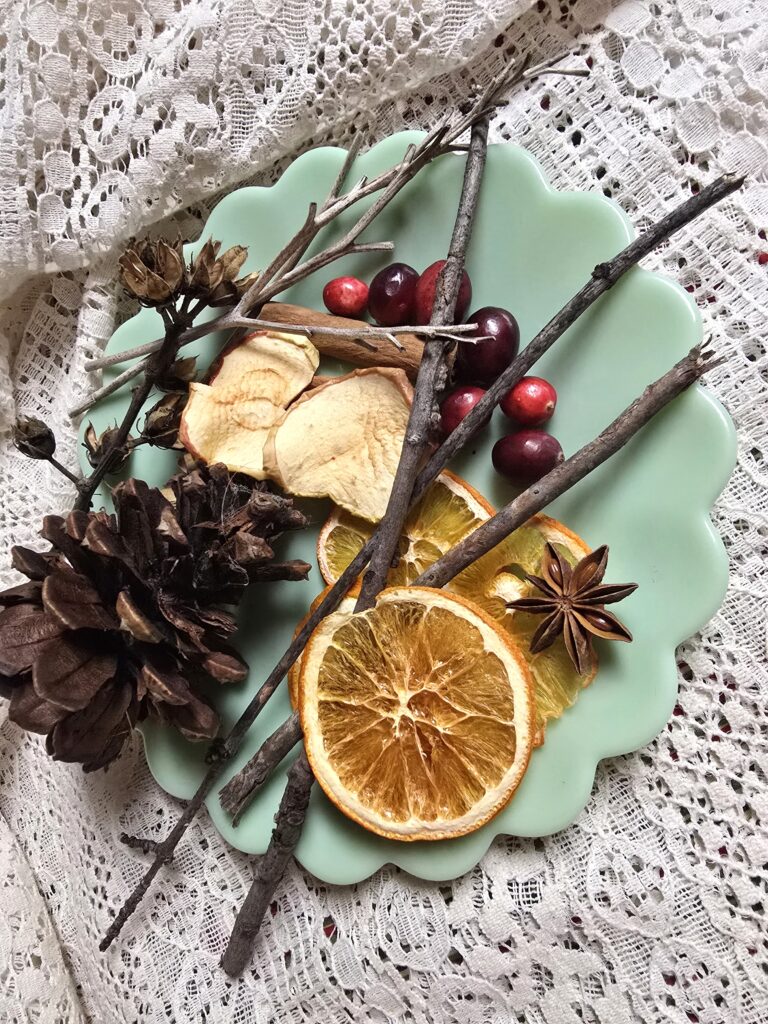
Prep Notes: A few days later in the week will utilize dried orange and apple slices. You can cut them now and dry them out over the next few days. If you happen to have a dehydrator, it will only take a few hours. Otherwise, you can check out these easy instructions for air or oven-drying them.
Day 1 — Let There Be Light
Read: Genesis 1:3; John 8:12; John 9:5
Listen: “Let There Be Light” and “O Little Town of Bethlehem”
Materials: Thick paper, cranberries, sponge or soft brush
Begin your journey with light—the very first gift spoken into existence. Crush a few cranberries, steep them briefly in hot water, and use the rosy dye as a soft wash across your paper. As the color spreads, talk with your children about light breaking into darkness and the promise carried through Scripture. Let the page dry flat under a stack of books overnight, becoming the quiet foundation for all the days ahead.

Day 2 — Make Room
Read: Luke 2:7
Listen: “Make Room” and “Joy to the World”
Materials: Small twigs, glue
Using gentle, natural materials connects our hands to the humility of Bethlehem. Arrange twigs into a simple triangular or arched shape—just the suggestion of shelter. Glue them onto yesterday’s glowing background. Leave it unfinished and open, reminding your family that the world did not make room for Him, yet He came anyway.

Day 3 — Away in a Manger
Read: Luke 2:12
Listen: “Manger Throne” and “O Come All Ye Faithful”
Materials: A pinecone (whole or trimmed), glue
Today’s element is the manger itself. A small pinecone or a few trimmed scales give the sense of something rustic and humble—perfect symbolism for the King who arrived not in splendor, but in a feeding trough. A small or softer pinecone can be cut in half and glued in place. I only had a giant pinecone, so I cut some of the scales off and arranged them in a rough manger shape. It’s a lovely opportunity to talk about new life, growth, and the “seed” imagery woven throughout Scripture.
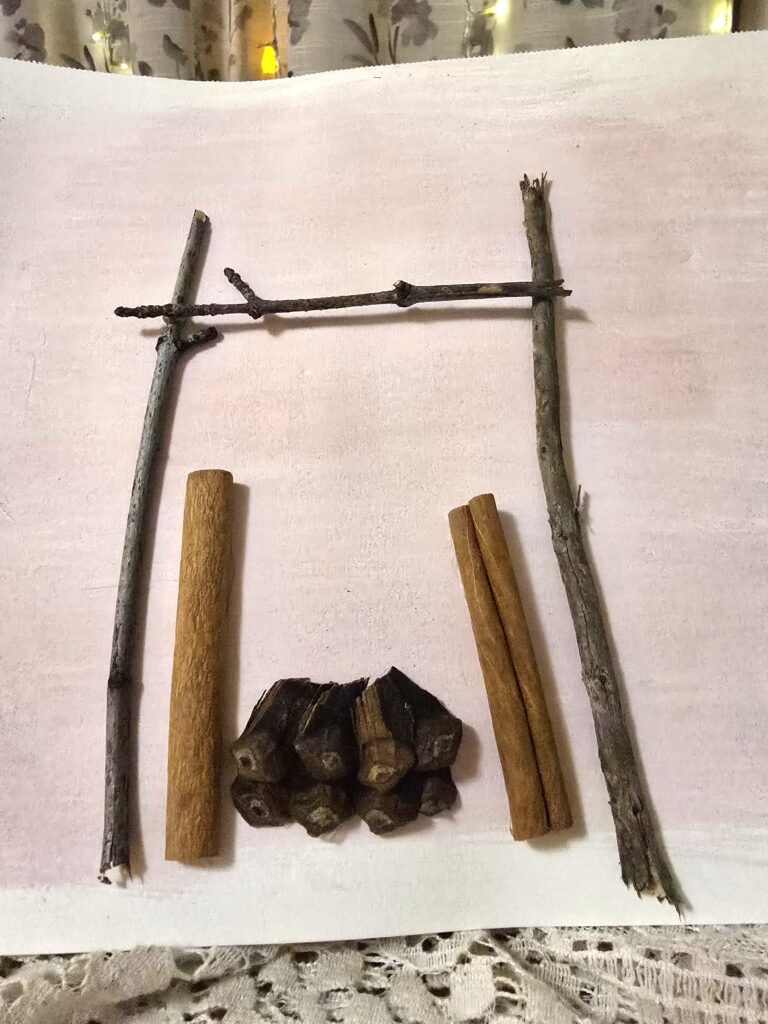
Day 4 — Faithful Servants of the Lord
Read: Matthew 1:18–24; Luke 1:26–38
Listen: “A Strange Way to Save the World” and “Come, Thou Long Expected Jesus”
Materials: Two cinnamon sticks or paired dried leaves
Choose two matching pieces—cinnamon sticks, sturdy leaves, or anything naturally symmetrical. Place them on either side of the manger to represent Mary and Joseph. Their simple shapes hint at watching, waiting, and protecting. This day always sparks good conversations about obedience, courage, and the mystery of God’s choosing.

Day 5 — Glory to God in the Highest
Read: Luke 2:8–14; Matthew 2:9–10
Listen: “Noel” and “The First Noel”
Materials: Seed pods, straw or dried grass, dried apple slices or leaves
Craft a small star above the stable using an anise pod or bits of straw. Whole anise seed pods are naturally star-shaped, and generally easy to find in the baking aisle or Hispanic foods aisle in your local supermarket. Keep it rustic and meaningful—just enough to draw the eye heavenward. For angels, cut gentle “V” shapes into opposite sides of dried apple slices or wide leaves to suggest wings. The effect is simple and organic, a reminder of the heavenly chorus that split the quiet night wide open with glory.
Day 6 — Come and Worship
Read: Matthew 2:1–2; Luke 2:15–20
Listen: “Follow the Star” and “Star Carol”
Materials: Small stones, acorns, seed pods, pine needles
Use small natural objects to form groups of figures: three on one side for the Magi, one or two on the other for shepherds. You can play with the textures of your items. Smooth stones can symbolize kings; rough pods or reeds can represent shepherds. I found these seed pods in my backyard that reminded me of the headdresses or crowns we often see in illustrations of the Magi, and my shepherds are slender pieces of dried lily reeds. As you arrange them, talk about how God drew both the learned and the lowly to witness His arrival.

Day 7 — O Holy Night
Read: John 1:14
Listen: “O Holy Night / Holy Forever” and “O Holy Night”
Materials: Dried citrus slice, glue
For the final day, gently place your dried citrus slice above or just touching the pinecone manger. The glowing circle becomes the Christ-child—small, bright, and radiant with the hope of the world. This simple, quiet addition completes your weeklong artwork and invites your family to pause as Christmas Eve arrives.
As you step through these seven days, remember that the goal is not the finished picture but the moments shared: hands busy, voices soft, Scripture lingering in your home, and hearts turning slowly toward Bethlehem. May this simple practice help your family savor a slow, sacred Christmas.

Megan Mora Fuentes
Enjoy this article?
For more insightful and encouraging homeschool related articles, homeschool living tips, and encouraging connections, visit our HEAV blog.