
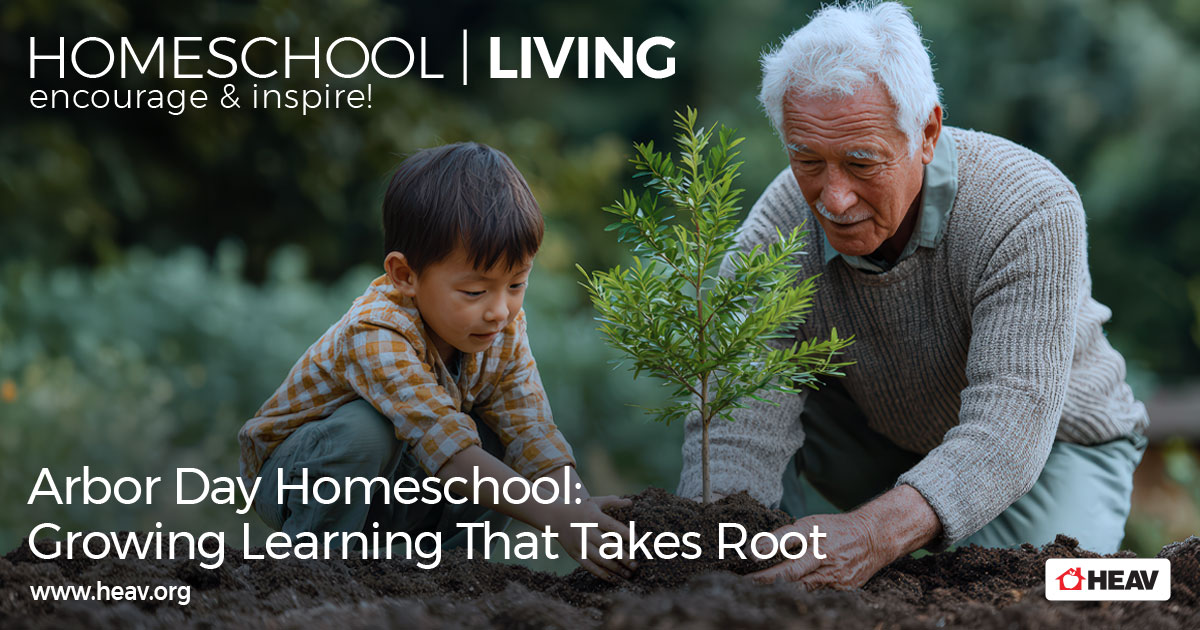
Arbor Day Homeschool: Growing Learning That Takes Root
Something hopeful happens when you plant a tree.
Maybe it’s the promise of shade on a hot summer day, blossoms in spring, or colorful leaves drifting down in autumn. Trees remind us that growth takes time, and that the small things we do today can shape the future in meaningful ways.
That’s exactly why Arbor Day makes such a wonderful addition to your homeschool rhythm. Celebrated each year in April, Arbor Day invites families to step outside, get their hands in the dirt, and learn about the towering plants that quietly support life all around us. Here are some wonderful opportunities to blend science, nature study, math, and language arts in your Arbor Day homeschool in a way that feels both meaningful and memorable.
Why Trees Matter More Than We Realize
Trees do far more than provide beauty in our landscapes. They are hardworking members of our ecosystem. Through photosynthesis, trees absorb carbon dioxide and release the oxygen we need. Their roots stabilize soil, prevent erosion, and help filter water before it reaches streams and rivers. Their branches provide shelter and food for birds, insects, and mammals.
In Virginia and across much of the eastern United States, familiar trees like oak, maple, dogwood, and pine form the backbone of local ecosystems. Even a single backyard tree can host dozens of species of insects, birds, and fungi. For homeschoolers, trees provide a living laboratory that changes with the seasons and rewards careful observation.
A Little History Beneath the Branches
Arbor Day began in Nebraska in 1872, when journalist and nature advocate J. Sterling Morton encouraged citizens to plant trees across the prairie landscape. On that first Arbor Day, more than one million trees were planted.
The idea quickly spread, and today Arbor Day is celebrated in all 50 states—though the exact date varies depending on climate and planting seasons.
In Virginia, Arbor Day is traditionally celebrated in April, making it perfectly timed for spring planting and outdoor learning.
Adding a bit of history to your Arbor Day plans helps children understand that caring for the land isn’t just science—it’s also part of our shared cultural story.
Try This at Home: Arbor Day Activities for Every Age
You don’t need acres of land to celebrate Arbor Day. Even a small yard—or a single container—can support meaningful learning.- Plant a Tree (or a Seedling) If space allows, plant a tree. It’s the classic Arbor Day homeschool activity! Let your children help select the right tree for your location by using a tree selection guide that matches species to your region and growing conditions.
Planting together naturally invites math into the day as children measure the depth of the hole or track how tall their tree grows each year. It also opens the door to meaningful science conversations about what trees need to survive—sunlight, water, nutrients, and space—and how each of those elements helps the tree grow strong.
- Become a Backyard Tree Detective. Choose one tree near your home and study it closely. Examine the leaf shape and bark texture—bark and leaf rubbings are great ways to document your observations. Search for signs of animal life in and around the tree, like bird nests, insect larvae, and holes in leaves or bark that could be evidence of feeding activity. See if you can tell how the tree disperses its seeds—pinecones, explosive seed pods, maple “helicopters,” burrs, nuts, etc. Keep a tree journal with sketches, notes, and seasonal observations. Over time, this simple practice strengthens observation skills while also giving children a natural opportunity to write descriptive sentences, poems, or short reflections about what they notice throughout the seasons.
- Host an Arbor Day Nature Scavenger Hunt Turn your Arbor Day homeschool into an outdoor adventure by organizing a nature scavenger hunt. Scavenger hunts are a great interactive activity for all ages, and can help younger learners stay engaged while practicing observation skills.
- This printable nature scavenger hunt list from The Homeschool Daily is a great resource (whether you use the whole mega list or select items most accessible to your students and in your area.) As children search for items on the list, conversations often arise about how each plant, insect, or natural object fits into the larger ecosystem. The activity also keeps children moving, which turns learning into an energetic outdoor experience rather than a seated lesson.
- Map Your Trees Head outdoors and map the trees around your yard or neighborhood. You and your children can count the number of trees, identify the different types, and create a simple map showing their locations. Creating a tree map naturally blends geography and math as children count trees, compare distances, and notice how different types of trees grow in different areas. Older students may even enjoy comparing your findings with tree types found in other parts of Virginia or across the United States.
Planting Seeds for the Future
Trees teach patience. They grow slowly, quietly, and steadily, often long after the person who planted them is gone. In many ways, homeschooling works the same way. The lessons we nurture today may not show immediate results, but over time, they grow into deep roots of knowledge, character, and curiosity.
This Arbor Day, whether you plant a tree, observe one in your yard, or simply explore the science behind how trees grow, remember that learning—like growth—takes time.

Megan Mora Fuentes
Enjoy this article?
For more insightful homeschool related articles, living tips, and encouraging connections, visit our HEAV blog.